

About this tour
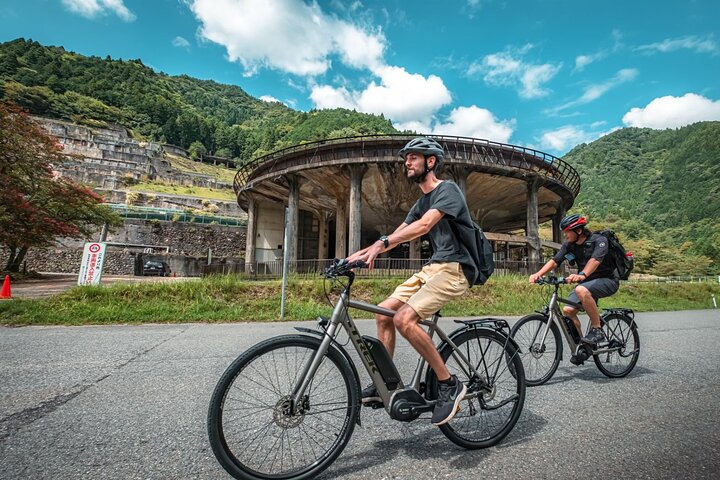
When Mia from our team cycled through Ikuno, a former mining town 1200+ years in the making, the ride traced industrial heritage alongside quiet rural Japan. The 5–6 hour loop starts in town—past weathered wooden houses—then climbs into forested mountain paths toward the century-old Mikobata Dressing Plant ruins. The highlight was stumbling onto a cast-iron bridge engineered by the French in the 1850s, now a beloved photo stop. You roll through shrine grounds, river valleys, and abandoned processing sites before lunch and a wander near Nii Station. It's a solid half-day immersion in post-industrial countryside, best for riders comfortable with hills and longer saddle time.
Highlights
- Ancient ore railway route now rideable as packed-earth and gravel path
- Cast-iron bridge built by French engineers — 170+ years old, genuinely striking
- Mikobata Plant ruins: industrial bones scattered across a vast, eerie site
- Local-made lunchbox eaten on-site; locals share ore-dressing stories
- Mountain passes link shrines, river crossings, quiet forest stretches
- Free exploration time near Nii Station after lunch to decompress
- Rainwear supplied — no excuses if weather turns cool or damp
What to expect
Mia's ride started rolling through Ikuno's narrow lanes of old timber houses, then immediately shifted onto the ore road—a compacted former rail bed where trolleys once hauled minerals. It's not sealed; expect a mix of firm gravel and dirt. The climb into the mountains is steady but not brutal, and the payoff arrives quickly: the French-built bridge materialises around a bend, a genuine photo moment, smaller than you'd expect but undeniably handsome.
As you push deeper, the landscape opens into forested switchbacks. Around mid-morning, the Mikobata Plant appears—a sprawl of rusted iron structures, concrete platforms, and overgrown machinery. It's haunting in the best way. Locals who've stayed in the area chat about its heyday; that context lands better than a plaque. Lunch is a locally prepared box—nothing fancy, but filling and eaten surrounded by industrial silence. After, you have breathing room to walk around, peek into sheds, or simply sit. The final stretch to Nii Station is gentler.
What travellers say
- Industrial heritage layered with genuine rural landscape, not theme-park Japan
- Cast-iron bridge and mill ruins are visually striking and historically solid
- Locally prepared lunch eaten on-site; rainwear included adds real convenience
- Mixed terrain—gravel, forest paths, quiet roads—keeps ride engaging
- Free time after lunch allows meandering exploration, not rushed schedule
- Sustained climbing; not a flat casual ride for unfit or sore riders
- Sparse facilities and interpretation once outside Ikuno town centre
- Weather exposure on open sections; cold rain or heat becomes very real
- Spinal injuries, pregnancy, poor fitness or weak bike handling ruled out
Themes summarised by our team from public information about this tour. Verify specifics on the operator's page before booking.
Good to know
This tour lands somewhere between sightseeing and real discovery. You're not following a sanitised trail; you're pedalling through a place locals actually live and remember. The cast-iron bridge and mill ruins are genuine; no recreations. Rainwear included is a solid touch. Lunch is cooked locally, not pre-packaged tourist fare. If you're after a less-crowded Japanese experience—quiet valleys, industrial archaeology, slow morning light through trees—this hits the mark. Suits anyone who can ride a bike steadily and isn't spooked by a few hours of gentle climbing.
You need real bike fitness; this isn't a flat meander. Spinal injuries, pregnancy, or dodgy cardiovascular health are genuine red flags—the hills and saddle time add up. Poor bike handling or unfamiliarity with gear shifting will frustrate you. Weather matters; cold rain on exposed stretches is no joke. Facilities are sparse once you leave Ikuno, so eat before you go or trust the lunch box. The ruins are photogenic but offer limited interpretation—you're relying on chance local chats. Peak seasons (late spring, early autumn) will draw groups; winter and summer are quieter but less comfortable.
Tour sold and operated by Viator via Viator. Descriptions on this page are original Global Hobo summaries written by our team — not copied from the operator. Prices and availability are confirmed at checkout.