



About this tour
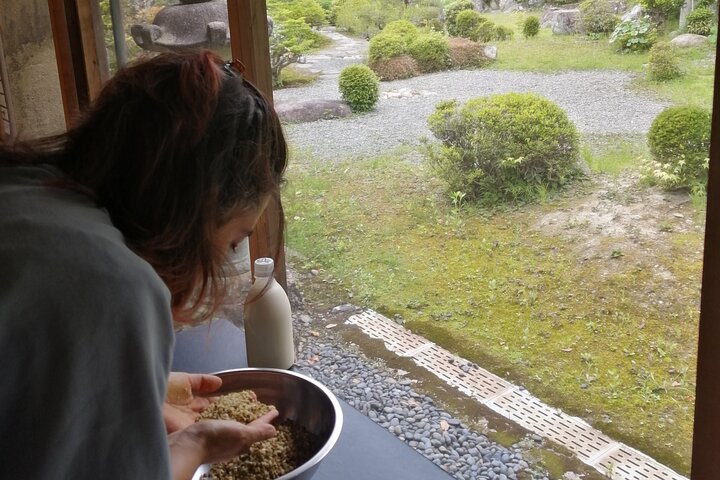
When Mia from our team tried this homemade miso-making class in Kyoto, she spent an hour in a traditional Japanese residence learning how to ferment her own batch to take home. The host is a massage therapist and tea instructor with two decades of wellness experience, and the class focuses on the health side of cooking — specifically how miso, made here from soy pulp (a waste product), fits into a balanced lifestyle. You'll make about 500g of miso, taste it fresh in soup, and sit with the philosophy that good food and body awareness go hand in hand. It's a quiet, intimate setting, not a factory-line cooking demo.
Highlights
- Make miso from soy pulp instead of whole beans — faster, easier, equally nutritious
- Take home 500g of your own miso after three months' fermentation
- Taste fresh miso soup and soy pulp mochi right after making
- Learn from a 20-year massage therapist who treats cooking as wellness practice
- Set in an old Japanese residence — feels lived-in, not staged
- Gluten-free, MSG-free, vegan-friendly approach to seasoning and tasting
- Understand how soy pulp miso reduces food waste while feeding you well
What to expect
Mia arrived at a traditional Kyoto house and was guided through miso-making by the host, who explained the history and health benefits as she worked. The process itself is straightforward — mixing soy pulp with koji (a traditional fermentation starter) — and because you're using pulp rather than whole soybeans, it's quicker and less physically demanding than classical miso-making. After the hands-on part, the host prepared a simple miso soup using the fresh batch and served it alongside soy pulp mochi, giving you a real taste of what you'd made. The vibe is unhurried and personal, not rushed through a checklist. The host talks about wellness philosophy while you taste, which some find grounding and others might find a bit spare if you're after pure cooking technique.
What travellers say
- Hands-on skill you can repeat at home with zero waste guilt
- Host brings 20 years of wellness thinking to the kitchen
- Take home a tangible result, not just a memory
- Intimate, unhurried setting in a real Japanese house
- Dietary options covered — gluten-free, vegan, MSG-free
- Learn the story of an underused ingredient (soy pulp)
- One hour is quick; you won't master fermentation science deeply
- Miso needs three months to ferment — requires patience and storage space
- Kids can taste but don't make, limiting family participation
- Quiet, philosophical vibe may feel slow if you prefer hands-on technique focus
Themes summarised by our team from public information about this tour. Verify specifics on the operator's page before booking.
Good to know
If you care about where your food comes from and how it affects your body, this hits differently. You're learning a traditional skill, taking home something you actually made, and getting a nuanced chat about fermentation and nutrition. It suits curious home cooks, people interested in Japanese culture on a practical level, and anyone wanting to slow down. Small group or one-on-one feel.
One hour is tight — you're not becoming a miso master. The class assumes adults are doing the work; children can tag along to taste but won't participate in making. You'll need to store your miso at room temperature for three months before it's ready, so you need cupboard space and patience. The location is accessible by public transport, but it's a residential area, not central. Peak times aren't mentioned, so check availability. Bring nothing special — the host provides ingredients and equipment.
Tour sold and operated by Viator via Viator. Descriptions on this page are original Global Hobo summaries written by our team — not copied from the operator. Prices and availability are confirmed at checkout.